
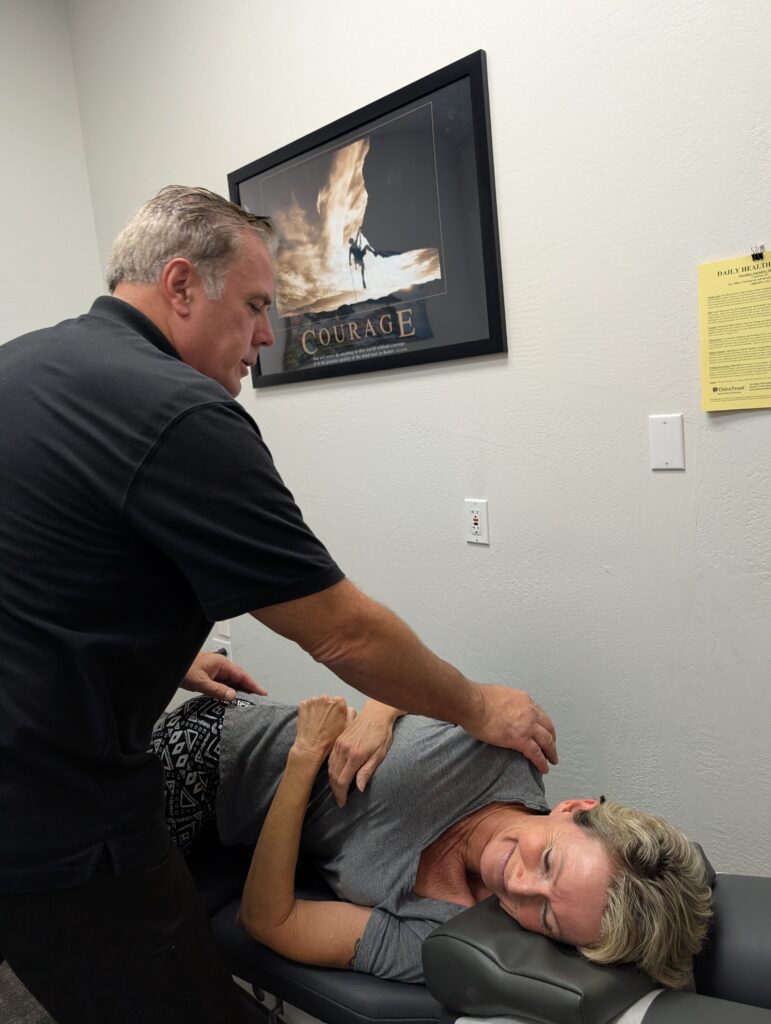
Recognizing the need for a spinal adjustment often begins with symptoms such as persistent back or neck pain, reduced range of motion, headaches, or discomfort after daily activities or minor injuries. At Advanced Spine & Rehab in Mesa, AZ 85206, our fully trained staff of medical professionals uses the latest chiropractic techniques to evaluate spinal dysfunction. If you’re experiencing ongoing discomfort or mobility limitations, a comprehensive assessment can determine whether a spinal adjustment may restore proper alignment and function.
What Does a Misaligned Spine Feel Like?
A misaligned spine can produce a variety of symptoms, including localized back or neck pain, muscle tension, stiffness, reduced mobility, or discomfort that worsens with movement or prolonged posture. Some patients experience radiating pain into the arms or legs, frequent headaches, or a feeling that the body is compensating or “out of balance.” These signs may indicate altered joint mechanics or nerve irritation. A thorough clinical evaluation can determine whether spinal misalignment is contributing to these symptoms.
How Often Should You Get Your Spine Adjusted?
The frequency of spinal adjustments depends on your specific condition, symptom severity, lifestyle demands, and how your body responds to treatment. Some individuals benefit from weekly care during an active phase of pain or dysfunction, while others transition to biweekly or monthly maintenance to support long-term spinal stability. Factors such as posture, work stress, past injuries, and overall mobility influence the ideal schedule. A personalized evaluation determines the safest, most effective adjustment plan.
How Much Does it Cost to Adjust Your Spine?
The cost of a spinal adjustment varies depending on factors such as the provider’s experience, regional pricing, and whether additional services—like imaging, soft-tissue therapy, or corrective exercises—are included in the visit. Many clinics offer single-visit rates as well as discounted care plans for ongoing treatment. Insurance coverage may reduce out-of-pocket expenses if chiropractic care is included in your benefits. A brief consultation can clarify expected costs based on your specific needs.
How Long Does it Take a Chiropractor to Realign Your Spine?
The duration of a spinal realignment depends on the underlying condition, the degree of joint restriction, and how your body responds to care. A single adjustment typically takes only a few minutes, but meaningful structural or functional improvement often requires a series of visits. Acute issues may respond quickly, while chronic or post-injury cases may need a longer corrective plan. Your chiropractor will determine an appropriate timeline based on a detailed clinical assessment.
What Is the Best Sleeping Position for Spine Alignment?
The most supportive sleeping positions for spinal alignment are on your back or side, as both help maintain the natural curves of the spine. Back sleeping allows weight to distribute evenly, while side sleeping with a pillow between the knees reduces pelvic rotation and lumbar strain. Using a pillow that keeps the neck neutral is also important. Stomach sleeping is generally less ideal because it increases stress on the neck and lower back.
Common Symptoms That May Indicate a Need for Spinal Realignment Treatments
• Persistent Back or Neck Pain
Ongoing discomfort in the back or neck often signals joint restriction, muscle imbalance, or irritation of surrounding nerves. Pain may worsen with activity, prolonged sitting, or poor posture. When these symptoms persist, they can interfere with normal movement patterns and lead to compensatory stress in other areas of the spine. Chiropractic evaluation helps identify whether misalignment, soft-tissue tension, or mechanical dysfunction is contributing to the pain and whether targeted adjustments may help restore mobility.
• Frequent Headaches or Migraines
Headaches—especially those beginning at the base of the skull—can be linked to cervical spine dysfunction, muscle tension, or nerve irritation. Misalignment in the upper spine may alter biomechanics, increasing strain on surrounding tissues. Individuals often notice pressure, throbbing, or tension that worsens with posture or screen use. Chiropractic assessment can determine whether spinal restrictions are a contributing factor and whether corrective care can reduce headache frequency, improve neck mobility, and support healthier neuromuscular function.
• Reduced Range of Motion or Stiffness
Difficulty turning the head, bending forward, or rotating the torso may indicate restricted spinal joints or muscular guarding. Stiffness can be caused by repetitive stress, prolonged sitting, previous injuries, or poor movement patterns. When mobility becomes limited, surrounding tissues can become overworked, leading to inflammation or compensatory pain. Chiropractic evaluation helps identify the cause of restricted motion and provides targeted adjustments and supportive therapies to restore flexibility and improve functional movement.
• Radiating Pain, Tingling, or Numbness
Symptoms that travel into the arms, hands, legs, or feet can indicate spinal misalignment affecting nerve pathways. Conditions such as nerve compression, disc irritation, or inflammation around spinal joints may result in sharp pain, burning sensations, or intermittent numbness. These symptoms often worsen with certain postures or movements. A chiropractic examination evaluates spinal integrity, nerve involvement, and functional patterns to determine whether realignment, decompression techniques, or supportive therapies can relieve pressure and improve nerve function.
Top 5 Medical Causes of the Symptoms Listed Above
• Degenerative Disc Disease (DDD)
Age-related wear of the spinal discs can reduce disc height, increasing pressure on joints and nerves. This may cause chronic back or neck pain, stiffness, and radiating symptoms. DDD often progresses gradually and can contribute to limited mobility and functional discomfort during daily activities.
• Herniated or Bulging Disc
When disc material protrudes outward, it can compress nearby nerves, leading to sharp pain, tingling, or numbness in the arms or legs. This condition may also trigger muscle guarding and reduced spinal mobility. Symptoms often worsen with bending, lifting, or prolonged sitting.
• Facet Joint Dysfunction
Irritation or inflammation of the small stabilizing joints along the spine can cause localized pain, stiffness, and reduced range of motion. Facet issues often worsen with twisting or extension movements. They may also contribute to muscle spasms and referred pain patterns.
• Cervical or Lumbar Radiculopathy
Nerve root compression in the neck or lower back can create radiating pain, numbness, or weakness along the affected nerve pathway. Causes include disc herniation, arthritic changes, or narrowing of the spinal canal. Symptoms frequently intensify with certain postures or physical strain.
• Myofascial Pain Syndrome
Chronic tension or trigger points within muscle and connective tissue can generate persistent, aching pain and restricted movement. These tight bands can also refer pain to distant areas, contributing to headaches, neck stiffness, or extremity discomfort. Poor posture and repetitive stress commonly worsen symptoms.
Top 5 Medical Treatments for Spine-Related Symptoms
• Chiropractic Spinal Adjustments
Manual adjustments help restore joint mobility, reduce nerve irritation, and improve overall alignment. This treatment often relieves back or neck pain, headaches, stiffness, and radiating symptoms caused by restricted joints or mechanical dysfunction in the spine.
• Physical Therapy and Rehabilitative Exercise
Targeted exercises strengthen supportive muscles, improve flexibility, and correct faulty movement patterns. Treatment reduces pain, enhances stability, and supports long-term recovery from disc issues, facet irritation, posture-related strain, and chronic muscle tension.
• Anti-Inflammatory or Pain-Relief Medications
Medications help reduce inflammation and alleviate acute discomfort associated with disc problems, muscle spasms, or joint irritation. They provide short-term symptom control while other corrective treatments address underlying mechanical issues.
• Spinal Decompression Therapy
Mechanical or manual decompression gently reduces pressure on spinal discs and nerve roots. This can alleviate symptoms such as radiating pain, numbness, or tingling related to disc bulges, herniations, or nerve compression.
• Trigger Point or Soft-Tissue Therapy
Focused treatment on tight muscle bands reduces tension, improves circulation, and decreases referred pain. It is effective for myofascial pain syndrome, chronic headaches, and stiffness caused by muscle guarding or postural strain.
Summary
This overview highlights common symptoms of spinal dysfunction and the leading medical causes behind pain, stiffness, headaches, and radiating nerve symptoms. It also outlines effective treatments such as chiropractic adjustments, physical therapy, decompression, soft-tissue therapy, and medications. These evidence-based solutions help relieve discomfort, improve mobility, and restore spinal function. Individuals searching for spine pain relief, disc treatment, nerve pain solutions, or chiropractic care can use this guide to understand available options for long-term recovery and improved musculoskeletal health.
Meet the Professional Staff
At Advanced Spine & Rehab in the Phoenix East Valley, patients receive individualized care grounded in compassion, understanding, and integrity. Our team is dedicated to creating a calm, encouraging environment where you feel supported throughout your healing journey. From your first visit, you’ll experience a personalized approach designed to uncover the root of your discomfort and guide you toward effective, lasting solutions. We are committed to helping every patient achieve meaningful wellness, improved function, and lasting pain relief.