
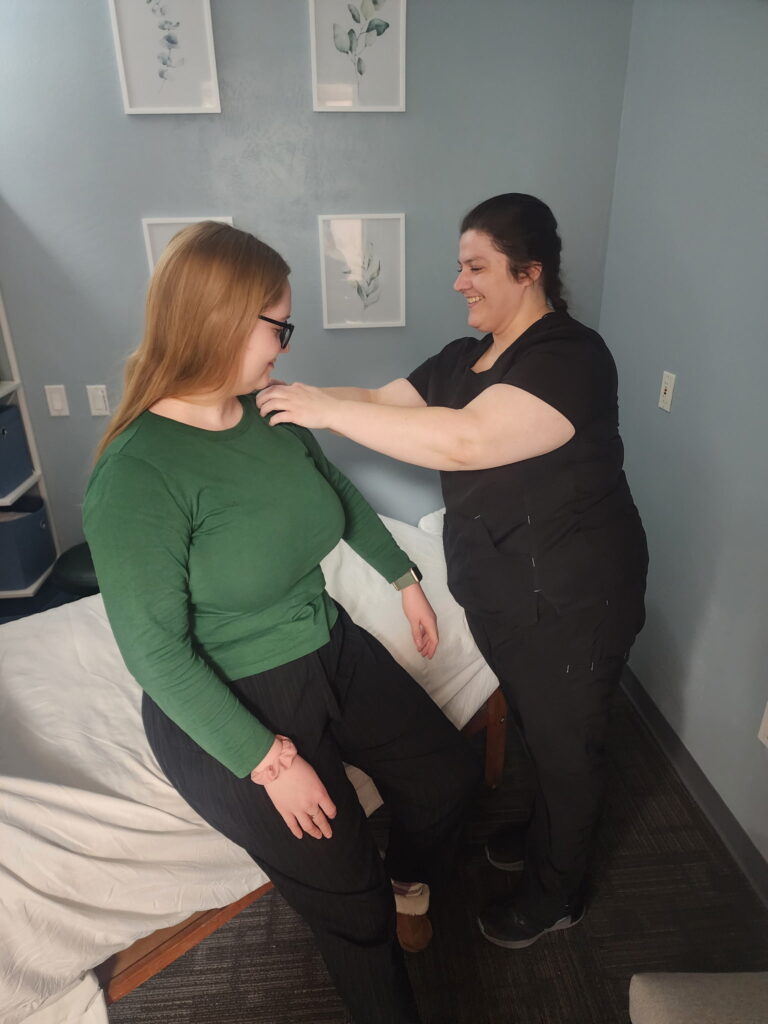
Choosing deep tissue or Swedish massage depends on your condition and goals. Swedish massage supports relaxation, circulation, and nervous system balance, making it ideal for stress, mild muscle tension, and recovery. Deep tissue targets deeper muscle layers and fascia to address chronic pain, postural strain, and injury-related tightness. At Advanced Spine & Rehab in Mesa AZ 85206, our complete staff of medical professionals evaluates your needs and integrates massage with chiropractic and rehabilitative care safely.
Is Trigger Point or Deep Tissue Massage Better?
Trigger point and deep tissue massage serve different therapeutic purposes. Trigger point therapy focuses on specific hyperirritable muscle knots that refer pain to other areas, making it effective for headaches, nerve-related pain, and movement restriction. Deep tissue massage works on broader muscle layers and fascia to address chronic tension, postural overload, and injury-related stiffness. The better option depends on whether pain is localized and referral-based or widespread and structural.
Which Massage is Best for Deep Tissue?
Deep tissue massage is best achieved through a therapeutic deep tissue technique specifically designed to work through superficial muscles into deeper layers of muscle fibers and fascia. This approach uses slow, controlled pressure to address chronic muscle tension, restricted mobility, postural strain, and injury-related adhesions. In some cases, myofascial release or neuromuscular techniques are incorporated to enhance outcomes, especially when long-standing pain or movement dysfunction is present.
Can Swedish Massage Remove Knots?
Swedish massage can help reduce mild muscle knots by improving circulation, decreasing superficial muscle tension, and calming the nervous system. It is most effective for recent or stress-related tightness rather than long-standing or deeply embedded adhesions. Persistent or painful knots often involve deeper muscle layers or fascial restriction and typically respond better to targeted techniques such as deep tissue or trigger point therapy.
What Conditions Can Swedish Massage Treat?
Swedish massage is commonly used to support conditions related to stress, muscle tension, and circulatory imbalance. It can help manage mild to moderate muscle tightness, stress-related headaches, fatigue, sleep disturbances, and general stiffness from prolonged sitting or repetitive activity. By promoting relaxation and improved blood flow, Swedish massage also supports recovery from everyday physical strain and complements broader rehabilitative and wellness care plans.
What is Deep Tissue Massage Best For?
Deep tissue massage is best for addressing chronic muscle tension, postural imbalances, and pain related to overuse, injury, or repetitive strain. It targets deeper layers of muscle and connective tissue to break down adhesions, improve mobility, and restore proper movement patterns. This technique is commonly used for neck and back pain, shoulder dysfunction, sciatica-like symptoms, and recovery from physical stress or trauma.
Common Symptoms That Prompt Massage Care (Deep Tissue or Swedish)
Persistent Muscle Tension or Tightness
Ongoing muscle tightness that does not fully resolve with rest or stretching is a common reason patients seek massage care. This tension may feel like stiffness, pulling, or reduced flexibility, often worsening with prolonged sitting, repetitive work, or stress. Swedish massage is helpful when tension is stress-related or generalized, while deep tissue massage is more appropriate when tightness is chronic, layered, and contributing to restricted movement or discomfort.
Localized Muscle Knots or Tender Areas
Muscle knots are felt as firm, tender spots within muscle tissue and may cause aching or sharp pain when pressed. These areas often develop from repetitive strain, poor posture, or previous injury. Swedish massage may ease superficial knots by improving circulation, but deeper or long-standing knots usually require deep tissue techniques to address underlying muscle fibers and fascial restriction that limit normal tissue glide and function.
Stress-Related Pain and Nervous System Overload
Symptoms such as tension headaches, jaw tightness, neck stiffness, shallow breathing, or generalized body soreness often reflect nervous system overload rather than structural injury. Swedish massage is commonly chosen in these cases because it promotes relaxation, lowers stress hormone activity, and improves circulation. Patients often notice improved sleep, reduced headache frequency, and an overall sense of physical and mental relief when stress is a primary contributor.
Limited Range of Motion or Stiffness
Difficulty turning the neck, raising the arms, bending, or moving freely without discomfort is a key sign that deeper muscular or fascial restriction may be present. When stiffness is mild or recent, Swedish massage can help restore movement by warming tissues and improving flexibility. When limitation is persistent or associated with pain patterns, deep tissue massage is often needed to restore proper muscle length and joint mechanics.
Recovery After Physical Strain or Injury
Following physical exertion, accidents, or repetitive strain, patients may experience soreness, guarding, or protective muscle tightening. Swedish massage supports early recovery by improving circulation and reducing muscle fatigue. Deep tissue massage becomes appropriate later in recovery when scar tissue, adhesions, or chronic compensation patterns develop, helping normalize movement, reduce pain, and prevent ongoing dysfunction.
Top Medical Causes Behind Massage-Related Symptoms
Myofascial Pain Syndrome
A chronic condition involving hyperirritable muscle fibers and fascial restriction that leads to persistent tightness, knots, and referred pain. It commonly develops from repetitive strain, postural stress, or unresolved injury and results in reduced flexibility, localized tenderness, and movement-related discomfort that often responds to targeted manual therapy.
Postural Dysfunction
Sustained poor posture alters normal muscle length and joint mechanics, creating overactive and inhibited muscle groups. This imbalance leads to chronic tension, stiffness, reduced range of motion, and stress-related pain patterns, particularly in the neck, shoulders, and lower back, often worsening with prolonged sitting or device use.
Soft Tissue Injury or Microtrauma
Repetitive microtrauma from overuse, athletics, or occupational strain causes small-scale muscle fiber damage and inflammation. Over time, this leads to protective muscle guarding, adhesion formation, and lingering soreness. Symptoms may persist even after the initial injury heals if tissue mobility is not fully restored.
Stress-Induced Neuromuscular Tension
Chronic stress activates the sympathetic nervous system, increasing baseline muscle tone and reducing circulation. This results in tension headaches, neck and jaw tightness, fatigue, and generalized muscle soreness. Symptoms often fluctuate with emotional or mental stress rather than physical activity alone.
Degenerative Joint and Disc Changes
Age-related or wear-and-tear changes in joints and spinal discs alter biomechanics and increase compensatory muscle tension. Surrounding muscles become chronically tight to stabilize affected areas, leading to stiffness, limited mobility, and deep aching discomfort that often benefits from soft tissue intervention.
Top Medical Treatments for Massage-Related Symptoms
Therapeutic Massage Therapy
Uses Swedish, deep tissue, or targeted techniques to reduce muscle tension, improve circulation, and restore tissue mobility. It addresses symptoms such as stiffness, knots, stress-related pain, limited range of motion, and post-injury muscle guarding.
Chiropractic Manual Therapy
Focuses on restoring proper joint motion and spinal mechanics to reduce abnormal muscle tension. This treatment helps relieve neck and back pain, postural strain, reduced mobility, and compensatory muscle tightness contributing to chronic discomfort.
Corrective Exercise and Rehabilitation
Prescribed exercises improve strength, flexibility, and neuromuscular control. This approach corrects postural imbalances, supports injured tissues, and reduces recurring muscle tension, stiffness, and movement-related pain by addressing the underlying functional cause.
Myofascial Release Therapy
Targets fascial restrictions that limit tissue glide and create pain patterns. It helps reduce deep muscle tightness, chronic stiffness, and movement restriction, particularly when symptoms persist despite rest or traditional stretching methods.
Stress and Nervous System Regulation Strategies
Interventions such as guided breathing, relaxation training, and lifestyle modification reduce sympathetic nervous system overactivity. These strategies help manage stress-related muscle tension, headaches, fatigue, jaw tightness, and generalized body soreness linked to chronic stress.
Summary
This article explains how massage therapy and integrative medical treatments address common symptoms such as muscle tension, knots, stiffness, stress-related pain, and limited mobility. Therapeutic massage, chiropractic manual therapy, myofascial release, corrective exercise, and nervous system regulation work together to repair soft tissue dysfunction and restore movement. These evidence-based treatments help relieve chronic pain, improve circulation, enhance flexibility, correct postural imbalance, and support long-term musculoskeletal health and recovery.
Meet the Professional Staff
At Advanced Spine & Rehab serving the Phoenix East Valley, patients are welcomed into a calm, supportive environment focused on individualized care. Our team is committed to compassion, understanding, and integrity, taking time to listen and tailor treatment to your specific needs. With a patient-centered approach, we help guide you on your road to recovery—addressing pain, restoring function, and supporting long-term wellness through thoughtful, professional care.