
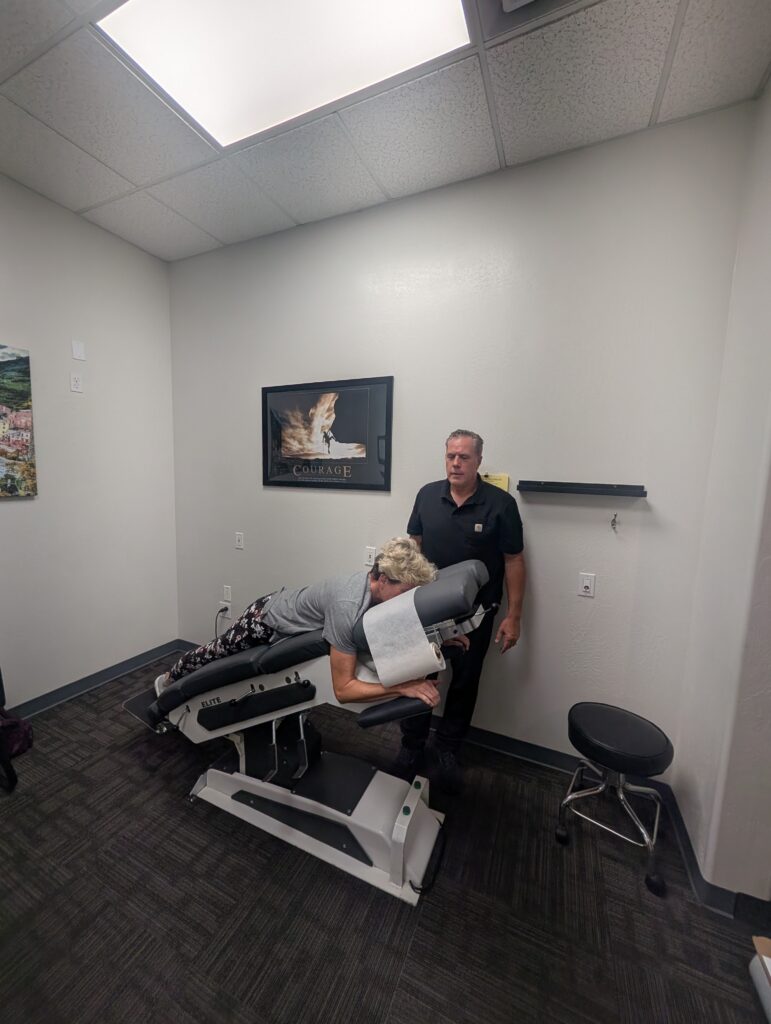
At Advanced Spine & Rehab in Mesa, AZ 85206, our team of medical professionals evaluates upper back pain by identifying joint dysfunction, muscular imbalance, and postural strain. Chiropractors use evidence-based spinal adjustments, soft-tissue therapies, and rehabilitative exercises to restore mobility, reduce inflammation, and improve neuromuscular control. Everyone on staff is trained in the latest treatment techniques, ensuring patients receive precise, compassionate, and comprehensive care for both acute injuries and chronic upper back discomfort.
How to Tell if Upper Back Pain Is Serious?
Upper back pain may be serious when it involves symptoms such as persistent or worsening pain, numbness or tingling in the arms, difficulty breathing, unexplained weight loss, fever, or pain following a significant accident. Severe stiffness, weakness, or changes in bowel or bladder control also require immediate evaluation. These signs can indicate underlying conditions affecting the spine, nerves, or internal organs, and timely assessment by a trained healthcare professional is essential.
How Long After a Chiropractic Adjustment Do You Feel Better?
Many patients begin noticing improvement within 24–48 hours after a chiropractic adjustment, especially when the pain is related to joint restriction or muscular tension. Some experience immediate relief, while others require several sessions for lasting change, depending on the severity and duration of their condition. Mild soreness can occur as the body adapts to improved alignment and mobility. Consistency with recommended exercises and follow-up care often enhances and accelerates overall recovery.
Which Therapy Is Best for Upper Back Pain?
The most effective therapy for upper back pain depends on the underlying cause, but a combined approach often provides the strongest results. Chiropractic adjustments help restore joint mobility, while soft-tissue therapies such as myofascial release or trigger-point therapy reduce muscle tension. Therapeutic exercise improves posture, scapular stability, and spinal endurance. In some cases, modalities like ultrasound or electrical stimulation support tissue healing. A personalized treatment plan ensures the safest and most targeted relief.
Can Ribs Out of Alignment Cause Back Pain?
Yes. Rib joints can become restricted or irritated where they connect to the thoracic spine, leading to sharp or aching upper back pain. Misalignment or dysfunction in these costovertebral and costotransverse joints may also cause muscle spasms, difficulty taking deep breaths, or discomfort with rotation and bending. Because rib motion is essential for both breathing mechanics and spinal stability, restoring proper mobility through targeted treatment can significantly reduce pain and improve function.
How to Fix a Rib Out of Place in the Back?
A rib that feels “out of place” is usually a joint restriction or irritation where the rib meets the thoracic spine. Treatment begins with a clinical assessment to confirm the source of pain and rule out fractures or internal causes. Chiropractors use gentle, controlled adjustments to restore rib and spinal mobility, often supported by soft-tissue therapy to reduce surrounding muscle tension. Targeted breathing exercises and postural strengthening help stabilize the area and prevent recurrence.
Common Symptoms That May Indicate a Rib Out of Alignment
Sharp, Localized Upper Back Pain
This pain is often sudden, stabbing, or pin-pointed near the spine or along the rib. It may worsen with twisting, bending, or lifting. Patients frequently describe a sensation that something is “stuck” or “catching.” Because rib joints contribute to spinal motion, even small restrictions can trigger protective muscle spasms. When this discomfort persists or limits daily activities, individuals often seek chiropractic evaluation for precise assessment and joint-focused treatment.
Pain With Deep Breathing or Sneezing
Rib joints play a key role in chest expansion. When irritated or restricted, inhaling deeply, coughing, or sneezing may cause sharp or pulling pain. This can mimic lung or cardiac discomfort, creating understandable concern. The pain typically sits on one side of the upper back or chest wall. If breathing becomes guarded, shallow, or increasingly uncomfortable, chiropractic evaluation helps determine whether rib dysfunction is the source and guides safe corrective care.
Radiating Discomfort Around the Chest or Side
A misaligned or restricted rib can irritate surrounding nerves, causing pain to wrap around the chest, shoulder blade, or side. This radiating pattern may lead individuals to believe the issue is muscular when it is actually joint-related. Movements such as reaching overhead, rotating the torso, or lying on the affected side may intensify symptoms. When these patterns persist, patients often seek chiropractic care to restore rib mobility and reduce nerve irritation.
Five Medical Causes of Symptoms Similar to a Rib Out of Alignment
Costovertebral or Costotransverse Joint Dysfunction
Irritation or restricted motion in the rib–spine joints can cause sharp, localized pain, breathing discomfort, and radiating chest or back pain. Muscle guarding often intensifies symptoms. Proper evaluation helps differentiate this from more serious spinal or thoracic conditions.
Intercostal Muscle Strain
Overstretching or tearing of the muscles between the ribs may produce sharp pain with deep breathing, twisting, or coughing. This strain often mimics rib misalignment because inflamed tissue restricts chest expansion and triggers localized tenderness.
Thoracic Facet Joint Irritation
Inflammation or mechanical stress on the small joints of the upper spine can cause sharp, pinpoint pain and radiation around the ribs or shoulder blade. Symptoms intensify with rotation or extension, resembling rib dysfunction.
Thoracic Disc Herniation
Though less common, a disc herniation in the mid-back can cause pain that wraps around the chest, numbness, tingling, or muscle weakness. Symptoms may mimic rib misalignment but require medical imaging when neurological patterns are present.
Shingles (Herpes Zoster)
Before the characteristic rash appears, shingles can create sharp, burning, radiating pain along a rib or chest wall. This early nerve irritation is often mistaken for rib or muscle pain, highlighting the need for careful clinical assessment.
Medical Treatments for Rib-Related Upper Back Symptoms
Chiropractic Adjustments
Gentle, controlled spinal and rib mobilizations restore proper joint mechanics, reducing sharp pain, muscle guarding, and breathing discomfort. This treatment helps reestablish normal rib motion and alleviates nerve irritation contributing to radiating chest or back symptoms.
Physical Therapy and Therapeutic Exercise
Targeted strengthening, stretching, and postural retraining reduce muscular tension and improve thoracic stability. These exercises address contributing biomechanical issues, helping relieve pain with movement, breathing, and daily activities while preventing recurrent rib or spinal dysfunction.
Soft-Tissue Therapy (Myofascial Release, Trigger-Point Work)
Manual therapy decreases muscle spasms and tension around the ribs and spine, improving mobility and reducing sharp or radiating discomfort. It is particularly effective when symptoms stem from muscular imbalance or protective guarding after joint irritation.
Anti-Inflammatory Medication (NSAIDs)
When inflammation contributes to rib or upper back pain, NSAIDs can reduce swelling, sensitivity, and breathing-related discomfort. This provides short-term relief but is most effective when combined with treatments addressing the underlying biomechanical dysfunction.
Interventional Pain Management (e.g., Local Injections)
In cases of persistent joint or nerve irritation, targeted injections can reduce inflammation and break the pain cycle. This approach is reserved for more severe or chronic symptoms that do not respond fully to conservative care.
Summary
Upper back pain caused by rib or thoracic joint dysfunction can lead to sharp, radiating, or breathing-related discomfort. Effective treatments include chiropractic adjustments, physical therapy, soft-tissue techniques, anti-inflammatory care, and targeted pain-management options. These evidence-based therapies restore mobility, reduce inflammation, and correct biomechanical imbalance. Understanding the most common symptoms—such as localized pain, difficulty breathing, and radiating chest discomfort—helps patients seek timely care and improve recovery. This guide enhances SEO for rib misalignment fixes and upper back pain repair.
Meet the Professional Staff
At Advanced Spine & Rehab in the Phoenix East Valley, you’ll find a dedicated team committed to delivering individualized care with compassion, understanding, and integrity. Our calm, encouraging environment is designed to support you every step of the way on your road to recovery. Whether you’re seeking relief from pain or looking for long-term wellness solutions, our experienced professionals take the time to listen, evaluate, and create personalized treatment plans that help you feel better, move better, and live better.